
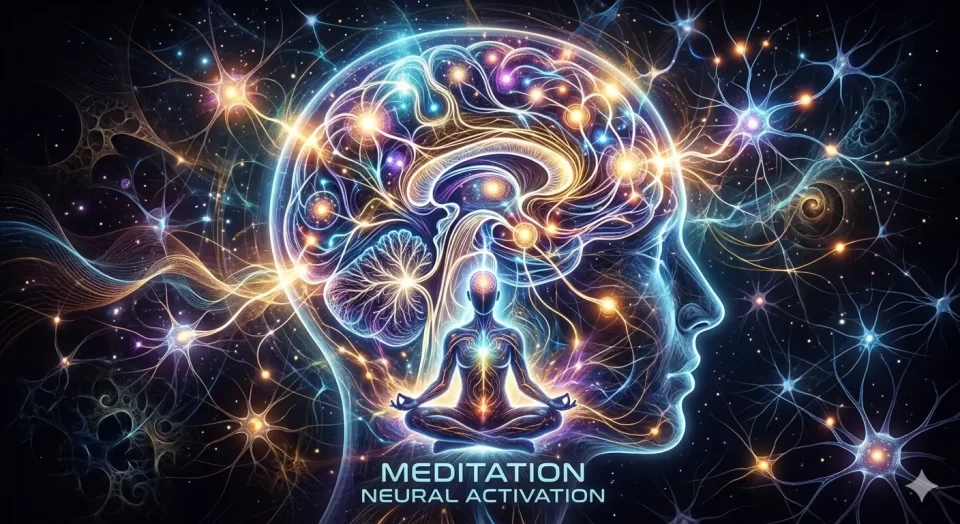
Meditation brain science is no longer a fringe topic; it’s a well-documented field of neuroscience that reveals how silent practice physically transforms the mind. For centuries, contemplative traditions described inner shifts through poetry and philosophy. Today, MRI scans, EEG mapping, and longitudinal studies confirm what ancient seekers always knew: consistent meditation changes the structure and function of the brain.
If you’ve ever questioned whether those quiet minutes on the cushion “actually do anything,” this article bridges the gap between empirical research and lived spiritual experience. You’ll learn exactly what happens in your brain during meditation, why these changes matter for daily life, and how to apply this knowledge without reducing practice to mere self-optimization.
⚠️ Disclaimer: This article explores neuroscience and contemplative practices for educational purposes. It is not medical advice. Consult a healthcare professional for clinical mental health conditions.
🔬 4 Documented Shifts in Meditation Brain Science
You don’t need a neuroscience degree to benefit from this research. Here’s what peer-reviewed studies consistently show happens in the brain during regular meditation practice.
1. The Amygdala Downregulates (Your Stress Response Softens)
The amygdala acts as the brain’s threat detector, triggering fight-or-flight reactions to perceived danger. Functional MRI studies reveal that mindfulness meditation reduces amygdala volume and reactivity over time .
Why this matters for seekers:
When the alarm system quietens, you gain space between stimulus and response. You stop reacting from survival mode and begin responding from awareness. This isn’t emotional suppression; it’s neural recalibration.
Practical note: Even 10 minutes daily initiates this shift. Consistency outweighs duration.
2. The Prefrontal Cortex Strengthens (Your Wisdom Center Activates)
The prefrontal cortex governs decision-making, emotional regulation, and meta-awareness (the ability to observe your own thoughts). Research shows increased gray matter density and enhanced connectivity in this region among long-term meditators .
Why this matters for seekers:
A fortified prefrontal cortex supports the very qualities spiritual paths cultivate: discernment, compassion, and non-attachment to mental chatter. You become the witness, not the passenger.
Practical note: Practices that emphasize gentle noting (“thinking,” “feeling,” “sensing”) directly train this region.
3. The Default Mode Network Quietens (The Inner Narrator Rests)
The Default Mode Network (DMN) is a collection of brain regions active during mind-wandering, self-referential thought, and rumination. Meditation significantly reduces DMN hyperactivity, which is strongly linked to anxiety, depression, and chronic overthinking .
Why this matters for seekers:
When the constant internal commentary softens, you experience what traditions call presence, stillness, or “the gap.” This isn’t emptiness; it’s clarity without noise.
🧘 Practical note: Open-monitoring and breath-awareness practices are particularly effective for calming the DMN.
4. Neuroplasticity Accelerates (Your Brain Rewires Itself)
Neuroplasticity is the brain’s lifelong capacity to form new neural connections. Meditation stimulates BDNF (brain-derived neurotrophic factor), a protein that supports neuron growth and synaptic flexibility .
Why this matters for seekers:
You aren’t just “relaxing” when you meditate. You’re literally sculpting neural pathways that support patience, emotional balance, and conscious choice. Practice doesn’t just change your mood; it upgrades the instrument of your mind.
🧘 Practical note: Every session is a vote for the brain you wish to embody.
🌉 Bridging Science and Spirit: A Balanced View
Some practitioners worry that explaining meditation through neuroscience strips away its mystery. I invite you to see it differently:
Science describes the mechanism. Spirit reveals the meaning. Together, they deepen the path.
When Research Supports Practice
- Knowing meditation physically calms the nervous system encourages consistency on difficult days.
- Understanding neuroplasticity reinforces that transformation is accessible—you aren’t “broken,” you’re rewirable.
- Studies on compassion meditation validate that loving-kindness practices literally expand empathy circuits.
When Practice Transcends Data
- No brain scan can measure the quality of surrender, the depth of presence, or the direct experience of awareness itself.
- The subjective sense of “I am” remains irreducible—and that’s sacred.
- Science maps the territory; contemplative practice walks it.
Let research inspire your discipline, but never let it become a new dogma. Stay curious. Stay humble. Stay open.
🎯 3 Science-Backed Micro-Practices for Daily Life
You don’t need hours of silence to benefit. Integrate these evidence-aligned practices into your existing routine:
🌬️ The 60-Second Reset (For Acute Stress)
- Pause and silently acknowledge: “Tension is here.”
- Take three slow breaths, extending the exhale slightly longer than the inhale.
- Whisper internally: “This moment is part of the path.”
Neural effect: Activates parasympathetic recovery + engages prefrontal regulation.
👁️ Noting for Mental Clarity (For Overthinking)
- Sit comfortably, eyes soft or closed.
- As thoughts arise, gently label them: “planning,” “worrying,” “remembering.”
- Return attention to breath or bodily sensation without judgment.
Neural effect: Strengthens meta-awareness + reduces Default Mode Network dominance.
💙 Loving-Kindness Micro-Burst (For Emotional Isolation)
- Place a hand gently over your heart.
- Silently offer: “May I be safe. May I be kind. May I be free.”
- Extend to one other person: “May you be safe. May you be kind. May you be free.”
Neural effect: Activates empathy networks + downregulates amygdala reactivity.
💡 Implementation tip: Anchor one micro-practice to an existing habit (after brushing teeth, before opening email, during your commute) to build effortless consistency.
❓ Frequently Asked Questions About Meditation Brain Science
Q: How long until meditation brain science benefits appear?
A: Studies show measurable neural changes within 8 weeks of consistent practice (20-30 minutes daily). Subtle shifts in emotional reactivity often appear within 2-3 weeks.
Q: Do I need to sit in silence to get brain benefits?
A: No. Walking meditation, mindful movement, and breath-awareness practices activate similar neural pathways. The key is sustained attention, not posture.
Q: Can meditation replace therapy or medication?
A: Meditation complements clinical care but does not replace it. For diagnosed mental health conditions, work with a licensed professional alongside contemplative practice.
Q: Is there a “best” meditation for brain health?
A: Mindfulness and loving-kindness practices have the most robust research backing. Choose the style that sustains your consistency—adherence matters more than technique.
🙏 Final Reflection: Beyond the Scan
Here’s the paradox worth holding:
Meditation changes your brain—but you are not your brain.
The research is compelling. The data is clear. Neuroscience validates what contemplatives have known for millennia: inner practice transforms outer experience.
And yet—the deepest moments of meditation often feel like dissolving the sense of a separate “me” who is meditating, in a “body” with a “brain.” In those glimpses, there is no observer, no observed—just awareness, awake to itself.
Let science be a helpful map. Let practice be the journey. And let mystery remain the destination.
💬 What resonates with you?
• Did any insight shift how you view your daily practice?
• Which micro-practice will you integrate this week?
• What questions remain about meditation and neuroscience?Share your reflection below—or email
rrrcontact@iamrrr.in. Your perspective enriches this community.
✨ If this article supported your journey, consider:
• 📧 Joining our Weekly Wisdom newsletter for exclusive reflections
• 💙 Supporting this work via Patreon to keep content freely accessible
• 🔄 Sharing with one fellow seeker who might benefit
With gratitude for your mindful engagement,
Rajesh Ramdev Ram
iamrrr.in | Spiritual Psychology & Conscious Living
