
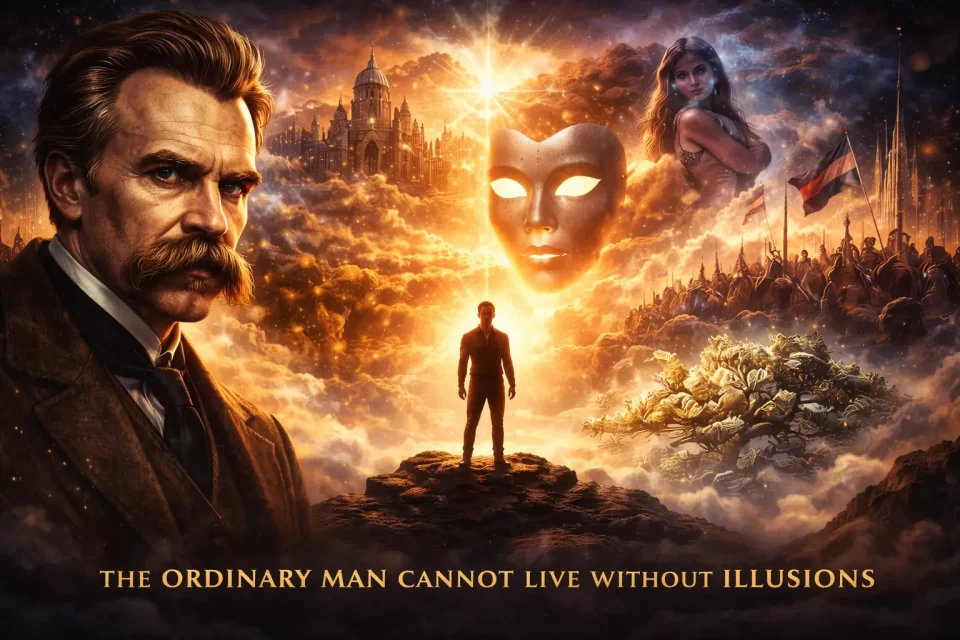
Friedrich Nietzsche Was Right: The Ordinary Man Cannot Live Without Illusions
Why Humans Need Illusions to Survive
Friedrich Nietzsche once made a shocking observation:
The ordinary man cannot live without illusions.
And he was right.
Truth is dangerous.
Truth destroys comfort.
Truth shatters the beautiful lies that people build around themselves to make life tolerable.
Look at the average human being carefully. His life is built not on reality but on beliefs, hopes, fantasies, and dreams.
Take those illusions away, and suddenly the ground beneath him disappears.
He becomes lost.
Afraid.
Empty.
Because most people are not searching for truth.
They are searching for psychological security.
Illusions Are the Psychological Support System
Human beings need illusions the way children need fairy tales.
A child sleeps peacefully because he believes the world is safe and magical.
But the adult is not very different.
Adults simply create more sophisticated illusions.
They believe:
• Life has a guaranteed meaning
• Justice always prevails
• Their religion has all the answers
• Their identity is permanent
• Their success will make them happy
These beliefs are not necessarily truths.
They are psychological cushions.
Without them, existence would feel terrifying.
The Ordinary Mind Cannot Bear Naked Reality
Reality is vast.
Indifferent.
Silent.
It does not promise happiness.
It does not guarantee fairness.
It simply exists.
For a conscious mystic, this is beautiful.
For the ordinary mind, it is frightening.
That is why illusions become necessary.
Religion creates heavenly promises.
Politics creates national pride.
Society creates social identities.
And individuals create personal stories about who they are.
All of this builds a protective shell.
Without that shell, many people would collapse psychologically.
Why Taking Away Illusions Can Be Dangerous
Nietzsche understood something very subtle.
If you remove illusions from someone who is not ready for truth, you destroy them.
You do not liberate them.
You traumatize them.
Imagine taking away the belief system of a person who has built his entire life on religion, identity, or ideology.
Suddenly he feels meaningless.
Directionless.
Empty.
That emptiness is unbearable for most people.
So they quickly create new illusions.
Because illusions are easier than awareness.
The Difference Between the Seeker and the Ordinary Man
There are two types of people in the world.
The ordinary person.
And the seeker.
The ordinary person wants comfort.
The seeker wants truth.
The ordinary person wants stability.
The seeker wants awakening.
The ordinary person protects illusions.
The seeker destroys them.
Truth is not for everyone.
Truth requires courage.
It requires the willingness to stand alone without psychological support.
Illusions and the Ego
Illusions are deeply connected with the ego.
The ego is itself an illusion.
You believe you are a fixed identity.
A permanent personality.
But if you observe carefully, you are constantly changing.
Your thoughts change.
Your emotions change.
Your beliefs change.
Even your body changes.
Yet the ego creates the illusion of a stable “self.”
This illusion provides continuity.
But in reality, it is a psychological story.
Society Runs on Shared Illusions
Civilization itself depends on collective illusions.
Money is an illusion.
Borders are illusions.
Social status is an illusion.
They exist only because people collectively agree to believe in them.
Without these shared beliefs, social structures would collapse.
So illusions are not always harmful.
They serve a functional purpose.
They organize human life.
But they also keep humanity asleep.
Religion and the Comfort of Belief
Religion has historically provided powerful illusions.
Promises of heaven.
Fear of hell.
Stories of divine protection.
These beliefs comfort people facing death, suffering, and uncertainty.
For millions of people, religion is not about truth.
It is about emotional security.
That is why challenging religious beliefs often creates anger.
Not because truth is threatened.
But because psychological stability is threatened.
Nietzsche’s Courage: Facing Truth Without Illusions
Nietzsche was not condemning humanity.
He was simply describing a psychological fact.
Most people are not ready to live without illusions.
But a few courageous individuals are.
These individuals choose truth over comfort.
They are willing to face existence without protective beliefs.
They live without borrowed meaning.
They create their own understanding.
This requires immense inner strength.
The Mystic’s Approach to Illusions
Mystics take a different path.
They do not replace illusions with new beliefs.
They dissolve illusions through awareness.
They observe the mind.
They see how thoughts create imaginary worlds.
They recognize how fear generates belief systems.
Slowly, through observation, illusions disappear.
Not through force.
Through understanding.
And when illusions disappear, something extraordinary happens.
Reality reveals itself.
Living Without Illusions
Living without illusions does not mean living without joy.
In fact, the opposite is true.
When illusions disappear, life becomes more authentic.
More immediate.
More alive.
You stop living through ideas.
You start living through experience.
You stop chasing imaginary futures.
You start appreciating the present moment.
Truth may initially feel harsh.
But ultimately it is liberating.
Awareness: The Way Beyond Illusion
The goal is not to violently destroy illusions.
The goal is awareness.
When you observe your thoughts carefully, illusions naturally fade.
You see the mind creating stories.
You see fear creating beliefs.
You see desire creating fantasies.
Observation brings clarity.
And clarity dissolves illusion.
That is the beginning of awakening.
Why Humanity Clings to Illusions
Illusions offer three powerful comforts:
- Security – They make life feel predictable.
- Identity – They give people a sense of who they are.
- Meaning – They provide explanations for suffering.
Without these psychological supports, the mind feels lost.
That is why people defend their illusions so fiercely.
They are defending their mental stability.
The Path of the Truth Seeker
If you truly seek truth, you must be ready to drop illusions.
Not gradually.
Not partially.
Completely.
You must be ready to live without borrowed answers.
Without inherited beliefs.
Without comforting lies.
This path is not easy.
But it leads to genuine freedom.
Because truth does not imprison.
Only illusion does.
FAQ – Illusions, Truth, and Human Psychology
Why do humans need illusions?
Illusions provide psychological comfort, security, and meaning in a complex and uncertain world.
What did Nietzsche mean by illusions?
Nietzsche suggested that many human beliefs and values are comforting narratives rather than objective truths.
Are illusions always harmful?
Not necessarily. Illusions can help maintain psychological stability and social organization.
What happens when illusions disappear?
For some people it creates fear and confusion. For seekers, it can lead to deeper awareness and awakening.
Can someone live without illusions?
Yes, but it requires emotional maturity, self-awareness, and the courage to face reality without psychological protection.
Conclusion: Illusion or Truth?
Nietzsche understood something profound.
Most people prefer comfortable lies to uncomfortable truth.
Illusions make life easier.
Truth makes life real.
The ordinary mind chooses comfort.
But the awakened mind chooses reality.
And once you taste reality, illusions lose their power forever.
Because no dream, however beautiful, can compete with truth.
