
📑 Table of Contents
- Introduction: When Science Meets Soul
- What Is Spiritual Biohacking? A Clear Definition
- Why This Approach Matters Now More Than Ever
- The Science Behind Spiritual Biohacking
- 4 Core Principles of Conscious Optimization
- Ethical Guidelines & Safety First
- 5 Evidence-Based Practices to Begin Today
- Your 30-Day Gentle Protocol
- Common Pitfalls & How to Avoid Them
- Tracking Progress Without Obsession
- Frequently Asked Questions
- Conclusion: Enhancement with Integrity
🌿 Introduction: When Science Meets Soul
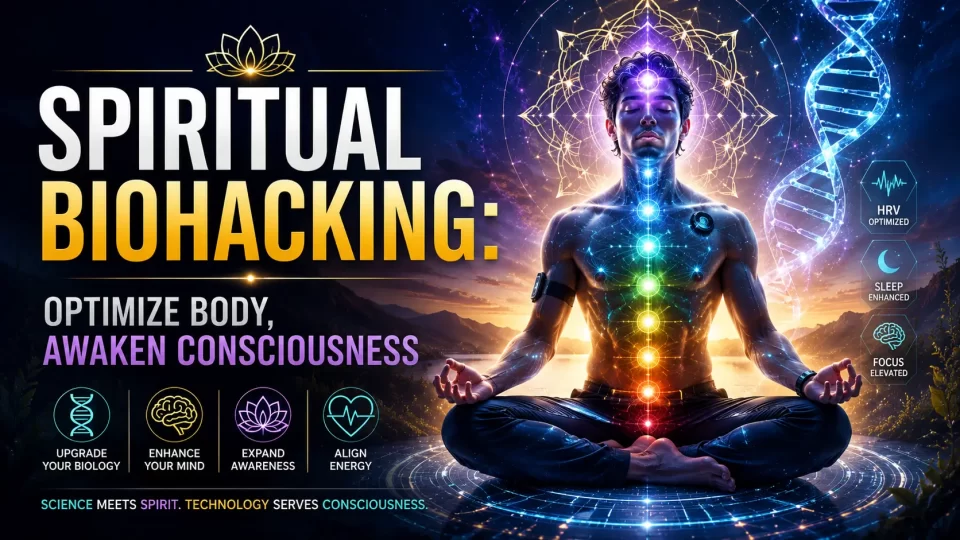
Spiritual biohacking isn’t about optimizing yourself into a productivity machine. It’s about using evidence-based tools to support your deepest values: presence, compassion, and conscious living. In an age of burnout, digital overwhelm, and fragmented attention, many seekers ask: Can I enhance my energy and focus without losing my soul?
This article explores spiritual biohacking—the mindful integration of neuroscience, wellness technology, and contemplative wisdom. Whether you’re curious about sleep optimization, nervous system regulation, or ethical supplementation, you’ll find grounded, values-aligned guidance here. You’ll learn how to work with your biology, not against it, while honoring the sacred rhythm of your inner life.
⚠️ Disclaimer: This article explores wellness practices for educational purposes. It is not medical advice. Consult a qualified healthcare professional before making changes to your health routine, especially if you have underlying conditions or take medications.
🔍 What Is Spiritual Biohacking? A Clear Definition
Spiritual biohacking is the conscious application of science-backed tools and practices to support holistic well-being—body, mind, and spirit. Unlike conventional biohacking, which often prioritizes performance metrics, spiritual biohacking centers meaning, values, and inner alignment.
This approach draws from:
- Contemplative traditions: Yoga, Tantra, Buddhist mindfulness, Taoist energy practices
- Modern science: Chronobiology, neuroplasticity, psychoneuroimmunology, vagal tone research
- Ethical wellness: Sustainable supplementation, non-exploitative technology, body-positive frameworks
- Systems thinking: Recognizing that optimizing one area (e.g., sleep) affects the whole (relationships, creativity, purpose)
The core question of spiritual biohacking isn’t “How can I do more?” but “How can I be more fully alive?” It rejects the hustle-culture narrative that treats the body as a machine to be maximized. Instead, it treats the body as a living ecosystem to be tended, respected, and understood. When you align biological rhythms with conscious intention, you don’t just feel better—you remember yourself.
💡 Why This Approach Matters Now More Than Ever
We live in paradoxical times: unprecedented access to wellness tools, yet rising rates of anxiety, exhaustion, and disconnection. Many biohacking communities inadvertently reinforce the very patterns they seek to heal: optimization as obligation, data as identity, productivity as worth.
Spiritual biohacking offers a different path. It invites you to:
- Enhance without exhausting: Use tools that restore, not deplete
- Measure without obsessing: Track what matters, release what doesn’t
- Experiment with compassion: Honor your unique rhythm, not someone else’s protocol
- Integrate, don’t isolate: Connect physical practices to emotional and spiritual growth
Modern life fragments our attention. We scroll through optimization tips while neglecting basic rest. We chase peak performance while ignoring nervous system signals. Spiritual biohacking gently returns us to wholeness. It reminds us that true vitality isn’t manufactured—it’s uncovered. As researcher Dr. Andrew Huberman notes, sustainable interventions must align with human biology and personal values. Source: Huberman Lab Podcast
🔬 The Science Behind Spiritual Biohacking
You might wonder: Is this just wellness philosophy, or does rigorous science support spiritual biohacking? The evidence is compelling and rapidly growing.
Chronobiology & Circadian Alignment
Your body operates on a 24-hour internal clock regulated by light, temperature, and meal timing. Disrupting this rhythm impairs sleep, mood, and cognitive function. Morning light exposure triggers cortisol release (healthy morning spike), while evening darkness stimulates melatonin. Aligning daily habits with natural cycles improves energy, digestion, and emotional stability. Harvard Medical School Sleep Division confirms that circadian consistency is one of the most powerful, free interventions available.
Neuroplasticity & Mindful Training
The brain rewires itself based on repeated experience. Meditation, breathwork, and focused attention physically strengthen the prefrontal cortex while calming the amygdala. This isn’t abstract spirituality—it’s measurable neural adaptation. Studies show that consistent contemplative practice increases gray matter density in regions linked to self-regulation and empathy. Mind & Life Institute Research documents how mental training reshapes brain architecture over time.
Vagal Tone & Nervous System Regulation
The vagus nerve connects your brain to your heart, lungs, and digestive tract. High vagal tone correlates with emotional resilience, social connection, and physiological calm. Practices like slow breathing, humming, cold exposure, and gentle movement stimulate vagal pathways. Dr. Stephen Porges’ Polyvagal Theory explains how safety cues shift the nervous system from defense to restoration. Polyvagal Institute offers clinical frameworks that align beautifully with contemplative traditions.
Mitochondrial Health & Cellular Energy
Your mitochondria generate ATP, the currency of cellular energy. They thrive on movement, nutrient density, fasting windows, and stress recovery. Poor sleep, chronic inflammation, and sedentary habits impair mitochondrial function. Simple lifestyle shifts—like walking after meals, prioritizing protein quality, and honoring rest days—directly support cellular vitality. NIH Office of Dietary Supplements provides evidence-based guidance on nutrients that support mitochondrial efficiency.
When you understand these mechanisms, spiritual biohacking stops being guesswork. It becomes intentional stewardship of your biology.
🧭 4 Core Principles of Conscious Optimization
Understanding spiritual biohacking means embodying these guiding truths in daily life:
1. Awareness Before Intervention
Before adding a supplement, device, or routine, pause. Ask: “What need am I trying to meet? Is this tool serving my values—or feeding my fear?”
Why it works: Prevents compulsive optimization, aligns action with intention.
2. Less Is Often More
The most powerful biohacks are frequently the simplest: consistent sleep, mindful breathing, time in nature. Complexity isn’t sophistication.
Why it works: Reduces decision fatigue, honors the body’s innate wisdom.
3. Integration Over Isolation
Optimizing sleep won’t fix a misaligned purpose. Enhancing focus won’t heal unprocessed grief. True well-being requires attending to all dimensions of being.
Why it works: Creates synergistic benefits, prevents fragmented self-care.
4. Ethics as Foundation
Choose tools and practices that:
- Respect your body’s signals, not just data points
- Support planetary health, not just personal gain
- Honor accessibility, not just exclusivity
Why it works: Builds sustainable practices rooted in compassion, not consumption.
⚖️ Ethical Guidelines & Safety First
Regardless of which tools you explore, spiritual biohacking wisdom offers practical guardrails to keep your practice grounded and safe:
Start with Foundations First
Prioritize these evidence-backed basics before adding complexity:
- Consistent sleep-wake times (even on weekends)
- Daily movement you enjoy (not punish yourself with)
- Whole-food nutrition that feels nourishing, not restrictive
- Regular digital boundaries (tech-free meals, bedtime rituals)
🔹 Track What Serves, Release What Obsesses
Use journals or apps to notice patterns—but if tracking increases anxiety, simplify. Data should inform, not dictate. Your lived experience matters more than metrics.
Choose Transparency Over Hype
Support brands and practitioners who:
- Disclose ingredients, sourcing, and research
- Avoid fear-based marketing (“You’re broken—buy this!”)
- Respect your autonomy to choose
🔹 Honor Your Unique Rhythm
Your optimal protocol isn’t someone else’s. Experiment gently. Notice what feels expansive versus constrictive. Trust your body’s feedback loop. Consult a healthcare provider before starting supplements, extreme fasting, or intense cold/heat protocols.
These principles align with frameworks like the Integrative Health Consortium and contemplative ethics. Safety and sustainability always precede optimization.
🌿 5 Evidence-Based Practices to Begin Today
Theory becomes transformation through practice. Try these simple, research-aligned ways to engage spiritual biohacking in daily life:
🔹 Morning Light + Intention (5 Minutes)
Within 30 minutes of waking, step outside (or near a window). Feel natural light on your skin. Take three conscious breaths. Set a simple intention: “Today, I move with ease.”
Why it works: Regulates circadian rhythm, anchors the day in presence, boosts daytime alertness.
🔹 The “Body Check-In” Pause (2 Minutes, 2x/Day)
Pause mid-morning and mid-afternoon. Scan your body without judgment: tension, warmth, energy, ease. Whisper: “I feel you. Thank you.”
Why it works: Bridges mind-body dissociation, reduces stress reactivity, cultivates self-compassion.
🔹 Evening Digital Sunset + Reflection (15 Minutes)
30 minutes before bed, power down screens. Replace with: gentle stretching, journaling one win + one lesson, or silent sitting. Notice how your mind settles.
Why it works: Supports melatonin production, processes the day, creates space for restorative sleep.
🔹 Breath Pacing for Vagal Tone (3 Minutes)
Inhale for 4 seconds, exhale for 6-8 seconds. Keep shoulders relaxed. Repeat 10 cycles.
Why it works: Slows heart rate, activates parasympathetic nervous system, lowers cortisol. Research on respiratory sinus arrhythmia confirms extended exhales enhance vagal modulation.
Movement Snacks Throughout the Day
Every 60-90 minutes, stand, stretch, or walk for 2-3 minutes. Shake out tension. Roll your shoulders. Notice your feet on the ground.
Why it works: Prevents metabolic stagnation, improves circulation, resets attention. Sedentary behavior independently impacts mood and cognition.
💡 Implementation tip: Anchor one practice to an existing habit (morning coffee, post-lunch break, bedtime). Consistency > intensity.
📅 Your 30-Day Gentle Protocol
Sustainable spiritual biohacking thrives on gradual integration. Use this flexible framework to build lasting habits without overwhelm:
Week 1: Foundation & Awareness
- Days 1-7: Morning light exposure + 3 conscious breaths
- Track sleep/wake times (no pressure to change yet)
- Notice energy dips without judgment
Week 2: Nervous System Support
- Days 8-14: Add evening digital sunset (30 min before bed)
- Practice 4-6 breathing once daily
- Begin 2-minute body check-ins
Week 3: Movement & Rhythm
- Days 15-21: Add 2-minute movement snacks every 90 minutes
- Take one 15-minute mindful walk outdoors
- Notice how movement affects mood and focus
Week 4: Integration & Reflection
- Days 22-30: Combine all practices naturally
- Journal weekly: What felt supportive? What felt forced?
- Adjust based on lived experience, not rigid rules
This protocol isn’t a performance test. It’s a conversation with your body. If a day feels heavy, simplify. If a practice feels expansive, deepen it. Spiritual biohacking honors your unique pacing.
⚠️ Common Pitfalls & How to Avoid Them
Even well-intentioned seekers stumble. Recognizing these traps keeps your spiritual biohacking journey aligned and sustainable:
🔸 The Optimization Trap
Chasing perfect metrics turns self-care into self-surveillance. Solution: Focus on how you feel, not just what you track. Drop tools that increase anxiety.
🔸 The Comparison Trap
Measuring your chapter 3 against someone else’s chapter 20 breeds frustration. Solution: Honor your starting point. Progress isn’t linear.
🔸 The Quick-Fix Trap
Buying gadgets before mastering basics leads to wasted money and disappointment. Solution: Master sleep, breath, and movement first. Tech supplements; it doesn’t replace.
The Spiritual Bypass Trap
Using “positivity” or “optimization” to avoid processing grief, anger, or trauma. Solution: Pair biological practices with emotional honesty. Seek therapy when needed.
Awareness dissolves these patterns. When you notice the trap, you’ve already stepped out of it.
📊 Tracking Progress Without Obsession
Measurement supports spiritual biohacking when used wisely. When it becomes compulsive, it backfires. Use these guidelines to track mindfully:
- Choose 1-2 metrics max: Sleep consistency, energy levels, or mood stability. More data ≠ more clarity.
- Use qualitative scales: Rate energy 1-10. Note emotional tone. Journal brief reflections.
- Review weekly, not daily: Daily fluctuations are normal. Weekly patterns reveal truth.
- Drop what hurts: If tracking increases anxiety, pause. Return to body-based awareness.
- Celebrate non-linear progress: Healing isn’t a straight line. Plateaus and dips are part of integration.
Tools like simple notebooks, habit trackers, or gentle apps work best. Avoid platforms that gamify wellness or trigger comparison. Your well-being isn’t a leaderboard.
❓ Frequently Asked Questions
Q: Is spiritual biohacking just for advanced practitioners?
A: Not at all. The most powerful practices are accessible to everyone: consistent sleep, mindful breathing, time in nature. Start where you are. Use what you have. You don’t need expensive gear or perfect discipline.
Q: How do I avoid biohacking burnout?
A: Apply the “less is more” principle. Choose 1-2 practices to deepen for 30 days before adding more. Regularly ask: “Is this serving my well-being—or my ego?” Rest is a biohack, not a reward.
Q: Can I combine biohacking with meditation or prayer?
A: Absolutely. Many find that physical practices (breathwork, movement, light exposure) deepen contemplative practice—and vice versa. They’re complementary pathways to presence, not competing disciplines.
Q: What supplements are safest for beginners?
A: Food-first is always best. If considering supplements, prioritize magnesium glycinate, omega-3s, or vitamin D3 (if deficient). Always verify with blood work and a healthcare provider. Examine.com offers unbiased, research-backed analysis free from brand influence.
Q: How long until I notice changes?
A: Nervous system shifts often appear within 1-2 weeks. Sleep and energy improvements typically stabilize by week 3-4. Neural and emotional integration deepens over 2-3 months. Patience is part of the practice.
Q: What’s one simple step I can take today?
A: Step outside for 5 minutes of morning light. Notice how you feel. That’s spiritual biohacking in action. No cost. No complexity. Just presence meeting biology.
Conclusion: Enhancement with Integrity
Here’s the quiet truth worth carrying:
You are not a machine to optimize. You are a life to embody.
Exploring spiritual biohacking isn’t about collecting tools or chasing metrics. It’s about returning home to yourself—with curiosity, compassion, and courage. When science serves soul, enhancement becomes an act of reverence. You stop fighting your biology and start collaborating with it.
Let evidence inform your choices. Let values guide your experiments. And let awareness be your ultimate biohack. The path isn’t about becoming someone new. It’s about remembering who you’ve always been—alive, awake, and entirely enough. Read More
💬 What resonates with you?
• Which principle shifted your view of optimization today?
• Which practice will you try this week?
• What questions remain about mindful enhancement?Share your reflection below—or email
rrrcontact@iamrrr.in. Your voice deepens this community. 🙏
✨ If this guide supported your journey, consider:
• 📧 Joining our Weekly Wisdom newsletter for exclusive reflections + printable wellness trackers
• 💙 Supporting this work via Patreon to keep wisdom freely accessible
• 🔄 Sharing with one friend exploring conscious well-being
With gratitude for your mindful engagement,
Rajesh Ramdev Ram
iamrrr.in | Spiritual Psychology & Conscious Living
